
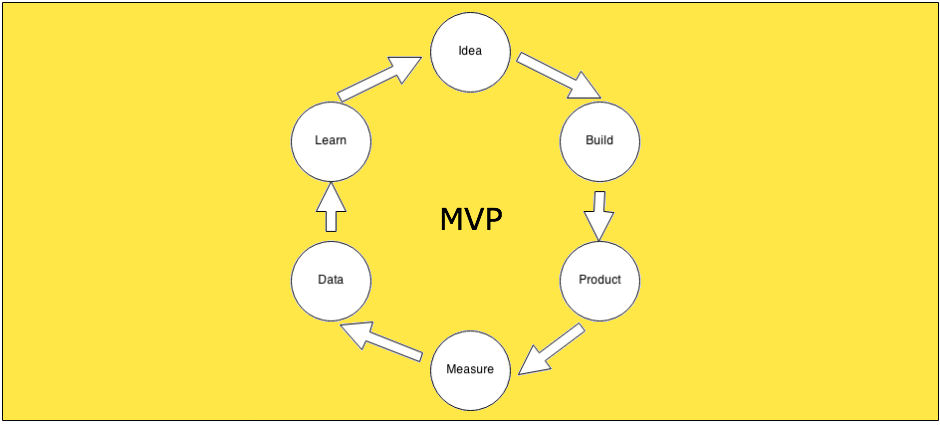
The biggest mistake you can make is to build a complete app and then release it to beta users for testing. Or even worse – directly launch in the App Store or Google Play. We have seen countless apps that suffer this folly and the outcome is an app that nobody wants to use or it’s designed in such a way that the user is not finding it intuitive enough to use – consistently.
To overcome this – we recommend building a Minimum Viable Product(MVP), based on the book “The Lean Startup”. With a MVP, the idea is to quickly iterate and bring out working models of the product with minimum set of features. This can be then tested by your beta testers(read – family and friends) to give you and your development team constructive feedback on what they liked and what they didn’t. Keep incrementally building this until you minimum specs are built and are decently tested or taken feedback off.
This will improve your chances of ensuring that you are not releasing an app which is having serious design flaws or is not good on User Experience. Remember – if you get bad reviews on the App Store, chances are future visitors are not going to download your app in the first place and this can have a devastating effect on your app’s reputation.
Keeping releasing new features by asking for feedback first. This can be from focused groups & feedback from actual users. List and prioritize requested features. This becomes the basis for future releases of your app. So in a nutshell this is the MVP folks. Hope this helped!
Resource Center
These aren’t just blogs – they’re bite-sized strategies for navigating a fast-moving business world. So pour yourself a cup, settle in, and discover insights that could shape your next big move.
How Is Generative AI Changing Software Development?
The evolution of software development has always been shaped by innovation—from the rise of agile methodologies to the adoption of cloud-native architectures. Today, a new paradigm is rapidly redefining [...]
How Are Businesses Using Generative AI to Improve Productivity?
In today’s rapidly evolving digital economy, productivity is no longer driven solely by human effort or traditional automation. Businesses are increasingly leveraging generative AI for business productivity to unlock [...]
How Can Generative AI Improve Data Analysis and Insights?
In today’s data-driven economy, organizations are inundated with vast volumes of structured and unstructured data. While traditional analytics tools have played a critical role in extracting insights, they often [...]
