
The rapid evolution of Generative AI has triggered one of the most critical business questions of the decade: Can generative AI replace human workflows?
From automated content creation and AI-driven customer support to software development and predictive analytics, enterprises are aggressively adopting AI-powered automation. Yet, while the technology promises efficiency and scalability, the broader discussion extends beyond replacement — it revolves around transformation.
As a technology-driven organization delivering AI development services and digital transformation solutions, we have observed that the debate is not about whether generative AI can replace humans, but how it reshapes workflows, augments intelligence, and redefines operational structures.
This article explores the reality behind AI automation, human workflows, enterprise productivity, and the future of work.
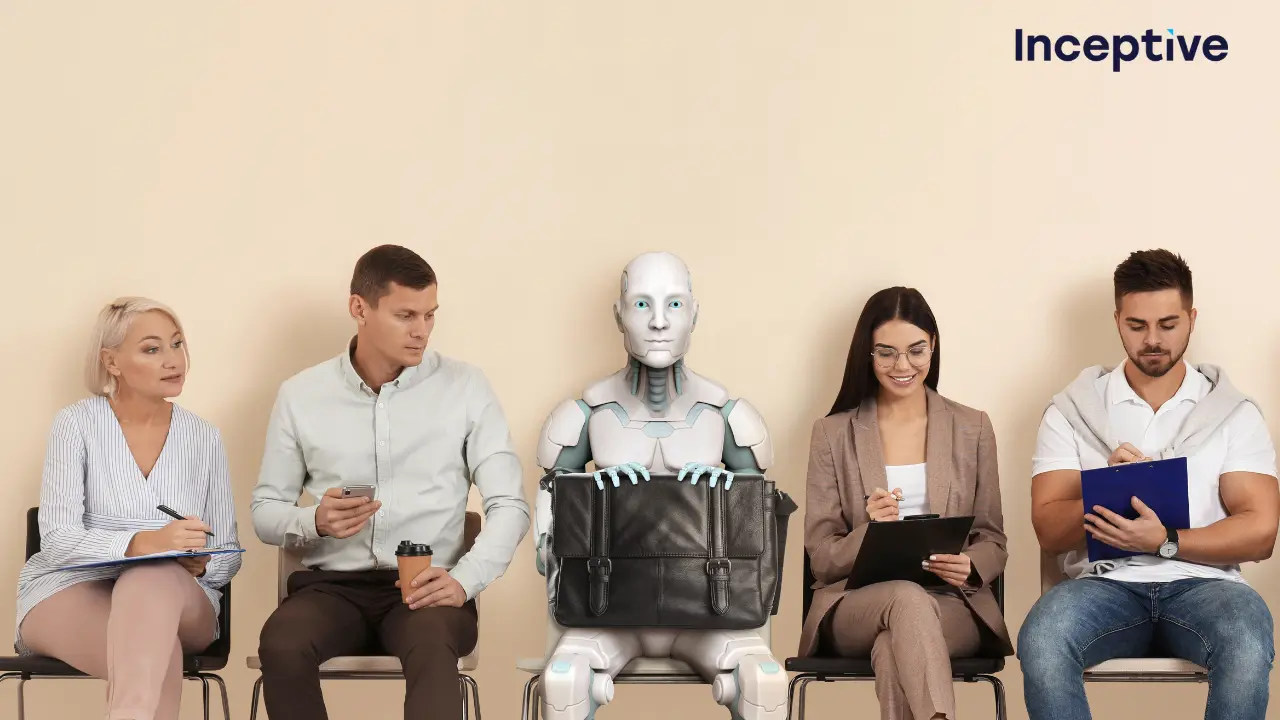
Understanding Generative AI in Business Workflows
Generative AI refers to artificial intelligence systems capable of producing new content, insights, code, designs, and data-driven outputs by learning from vast datasets. Powered by large language models (LLMs), deep learning, and neural networks, generative AI development has unlocked applications across industries.
In practical enterprise scenarios, generative AI can:
-
Automate document generation
-
Draft legal and compliance reports
-
Generate marketing content
-
Assist in software coding
-
Analyze customer data
-
Power AI chatbots
-
Create predictive forecasts
However, replacing human workflows entirely is a far more complex proposition.
The Nature of Human Workflows
A human workflow is more than a sequence of tasks. It involves:
-
Contextual decision-making
-
Emotional intelligence
-
Ethical reasoning
-
Adaptability
-
Cross-functional collaboration
-
Creativity beyond pattern recognition
While AI-driven automation excels at structured and semi-structured tasks, human workflows involve dynamic judgment and tacit knowledge that is difficult to codify into algorithms.
Through our experience implementing enterprise AI solutions, we have found that organizations often overestimate automation potential and underestimate the strategic role of human oversight.
Where Generative AI Can Replace Human Workflows
Generative AI can effectively replace or significantly automate workflows that are:
1. Repetitive and Rule-Based
Business process automation works exceptionally well for:
-
Data entry
-
Invoice generation
-
Customer ticket classification
-
Standard report creation
These are high-volume tasks with defined parameters.
2. Content at Scale
AI-powered content generation tools can draft:
-
Blog outlines
-
Email campaigns
-
Product descriptions
-
Technical documentation
This does not eliminate human editors but drastically reduces turnaround time.
3. Code Assistance and Development Support
Generative AI development tools now assist software engineers by:
-
Writing boilerplate code
-
Debugging
-
Suggesting improvements
-
Refactoring
While AI does not replace senior architectural thinking, it enhances development velocity.
4. Data Analysis and Insights
Machine learning models can analyze large datasets faster than human analysts, identifying trends and anomalies with greater precision.
In these domains, generative AI replaces task-based execution, not strategic direction.
Where Human Workflows Still Dominate
Despite AI advancements, several areas require irreplaceable human intelligence.
Strategic Decision-Making
AI can generate recommendations, but final decisions require:
-
Risk assessment
-
Stakeholder alignment
-
Market intuition
-
Ethical considerations
Complex Problem Solving
Unstructured, ambiguous challenges demand human creativity and experience beyond pattern-based outputs.
Emotional and Cultural Intelligence
Customer negotiations, leadership communication, and team management rely on empathy and emotional nuance.
Accountability and Governance
AI systems lack moral responsibility. Enterprises must maintain human oversight to ensure compliance and ethical AI deployment.
Impact on Workforce and Productivity
Organizations implementing AI automation often experience:
-
30–60% reduction in task completion time
-
Improved operational efficiency
-
Faster product development cycles
-
Enhanced scalability
However, replacing entire human workflows can introduce risks:
-
Over-reliance on automated outputs
-
Data bias propagation
-
Security vulnerabilities
-
Reduced innovation if human input is minimized
Businesses that succeed with generative AI adoption focus on workforce upskilling, not workforce replacement.
Risks of Fully Replacing Human Workflows
While the idea of complete automation is appealing, several challenges arise.
1. Accuracy Limitations
Generative AI can produce confident but incorrect outputs. Without validation, this can lead to business-critical errors.
2. Data Privacy Concerns
AI systems require extensive data training. Poor governance may expose sensitive information.
3. Ethical Implications
Bias in training datasets can impact fairness in hiring, lending, healthcare, and decision-making.
4. Lack of Contextual Awareness
AI models process patterns, not lived experience. Nuanced cultural or situational contexts may be misunderstood.
Through enterprise AI consulting, we have observed that organizations attempting aggressive automation without governance frameworks often face operational setbacks.
Industry-Specific Perspectives
Healthcare
AI assists in medical documentation and diagnostics but does not replace clinical judgment.
Finance
Automated risk analysis improves efficiency, but regulatory accountability requires human oversight.
Manufacturing
Predictive maintenance systems reduce downtime, yet engineers interpret operational complexities.
IT and Software Development
Generative AI development tools accelerate coding, but solution architecture and cybersecurity remain human-led domains.
Across industries, the pattern remains consistent: AI replaces tasks, not expertise.
Our Perspective from Enterprise AI Implementation
Having worked across AI development services, workflow automation initiatives, and digital transformation projects, we consistently observe three truths:
-
AI delivers maximum ROI when integrated strategically.
-
Human oversight ensures reliability and ethical alignment.
-
Sustainable automation balances efficiency with intelligence.
Generative AI can transform operations, increase productivity, and unlock innovation — but replacing human workflows entirely is neither practical nor advisable.
The competitive advantage lies in combining AI-powered systems with human expertise.
Frequently Asked Questions (FAQs)
1. Can generative AI completely replace human workflows in businesses?
No. Generative AI can automate repetitive and structured tasks but cannot fully replace strategic decision-making, creativity, emotional intelligence, and accountability.
2. What types of workflows are most suitable for AI automation?
Repetitive, rule-based, data-intensive workflows such as report generation, content drafting, customer support responses, and predictive analytics are highly suitable.
3. Is generative AI safe to use in enterprise environments?
Yes, when implemented with proper governance frameworks, data security policies, and human oversight mechanisms.
4. How does generative AI improve productivity?
AI automation reduces manual effort, accelerates task execution, improves scalability, and enhances data-driven insights, enabling teams to focus on strategic activities.
5. Will generative AI reduce jobs in the future?
AI may transform job roles rather than eliminate them. Many positions will evolve to focus more on strategic thinking, AI supervision, and innovation.
Resource Center
These aren’t just blogs – they’re bite-sized strategies for navigating a fast-moving business world. So pour yourself a cup, settle in, and discover insights that could shape your next big move.
How Is Generative AI Changing Software Development?
The evolution of software development has always been shaped by innovation—from the rise of agile methodologies to the adoption of cloud-native architectures. Today, a new paradigm is rapidly redefining [...]
How Are Businesses Using Generative AI to Improve Productivity?
In today’s rapidly evolving digital economy, productivity is no longer driven solely by human effort or traditional automation. Businesses are increasingly leveraging generative AI for business productivity to unlock [...]
How Can Generative AI Improve Data Analysis and Insights?
In today’s data-driven economy, organizations are inundated with vast volumes of structured and unstructured data. While traditional analytics tools have played a critical role in extracting insights, they often [...]
